For decades, Indian cities have been shaped by a zoning logic that treated life as a sequence of isolated functions: work at an economic hub of the city, shop elsewhere at a retail centre, and live somewhere else entirely. But cities don’t operate in silos. They move to the rhythms of people such as commuting, lingering, browsing, pausing, meeting, and celebrating. As our urban environments grow denser and more mobile, the real opportunity lies in designing for these lived behaviours rather than for predetermined programs. Mixed-use architecture becomes powerful when it restores this fluidity; when it understands that the city’s true unit is not the building, but the human.
Mixed-use, therefore, cannot be reduced to stacking commercial activities on top of workplaces or adding retail below offices. It must emerge from a deeper reading of how people actually inhabit space: where they pause, what draws them in, what anchors social energy, and which spatial cues make them feel intuitively at ease. Successful mixed-use environments are not programmatically diverse; instead, they are behaviourally elastic.
This shift becomes evident when design begins with people’s micro-behaviours instead of building types. Raffles Street, an ongoing retail project, is a clear manifestation of this philosophy. It was never imagined as a shopping street with occasional entertainment layered in. Instead, the design originated with a simple human need: the desire to pause, unwind, and reset while travelling. The architecture curates a spectrum of behaviours such as watching a performance in an amphitheatre with coffee in hand, lounging in cocoon beds, or wandering through shaded monsoon verandas. These choices came first; the shops followed. Raffles Street demonstrates that when space amplifies unplanned, joyful behaviours, economic activity becomes a natural by-product rather than the primary driver.
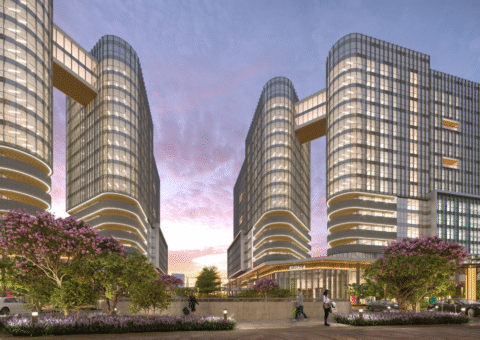
If Raffles Street shows how behaviour-first design transforms a transit pause, Eldeco Centre demonstrates how it can reshape the contemporary workplace. Located between two dense metro nodes in South Delhi, the development shifts fluidly between office campus, retail edge, and community plaza. Shaded corridors create comfortable edges for strolling and browsing, while column-free ground-floor retail adapts to evolving commercial demands. Eldeco Centre’s mixed-use identity is seamless because it understands that urban professionals can no longer transition smoothly from “work” to “leisure”; the rhythms of these activities overlap.
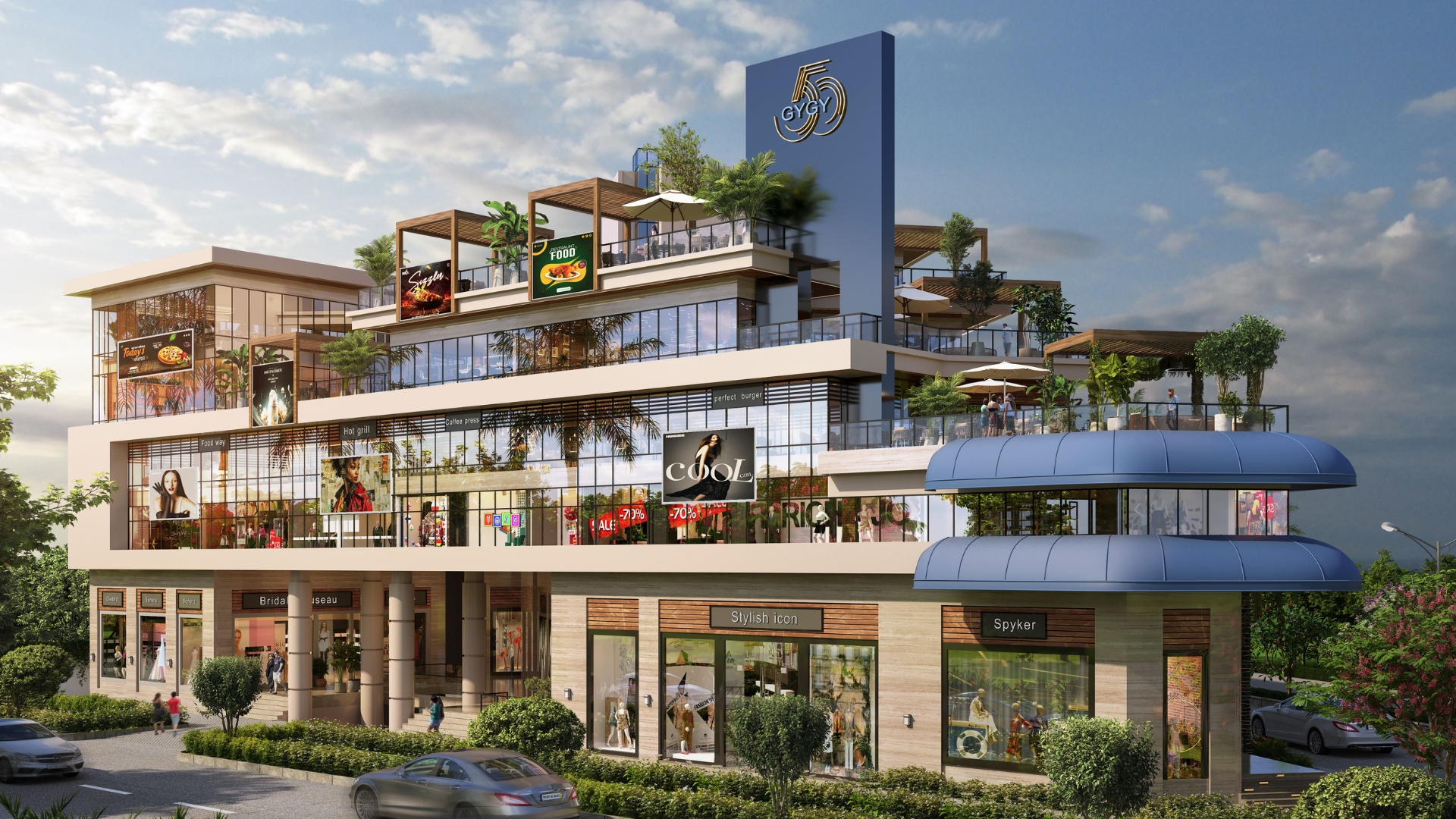
At the neighbourhood scale, an ongoing project, GyGy Five-O, examines another behavioural truth: people gravitate towards places where life feels visible and shared. Instead of hiding dining areas behind dark façades, the project brings activity to the edge, making cabanas and alfresco terraces part of the urban frontage. Elevated yet visually open, they offer privacy without isolation. In a densely populated residential pocket, this transparency restores the informality of the street, where eating, socialising, and strolling blur together. GyGy Five-O works not because of its programmatic mix, but because it acknowledges that people prefer places that reveal their energy.
Across these projects, a broader lesson emerges: mixed-use developments succeed when they prioritise the choreography of everyday life. When architecture responds to human impulses like resting, watching, and gathering, cities regain their spontaneity. Mixed-use is not the coexistence of different functions; it is the coexistence of different behaviours. And when design amplifies these behaviours with sensitivity, the result is a living ecosystem rather than a collection of buildings.
As architectural boundaries continue to be pushed, luxury housing in India will undoubtedly remain at the forefront of architectural innovation, offering residents a life of unmatched luxe and style while enabling community living.