Architecture is no longer constrained to static forms and rigid façades. Today’s buildings are expected to respond to their environment, adapt to occupant needs, and reflect the cultural and technological contexts they inhabit. In this context, sustainable, modern architecture is increasingly exploring kinetic façades: dynamic building skins that shift, rotate, or morph in response to sunlight, wind, or temperature. These adaptive systems have emerged as one of the most expressive tools in contemporary design, allowing architects in India to balance aesthetics with performance and create structures that are both functional and alive.
Kinetic façades operate at the intersection of engineering, design, and environmental strategy. Unlike traditional static exteriors, these façades are equipped with sensors, motors, and AI algorithms that allow continuous adjustment. Such systems regulate sunlight, airflow, and thermal gain, reducing energy consumption while enhancing occupant comfort. At the same time, kinetic façades offer architects in India a new medium for visual expression—patterns, textures, and movement that transform buildings into living, responsive entities.
Odisha Mining Corporation Headquarters: A Case Study by Top Architects in India
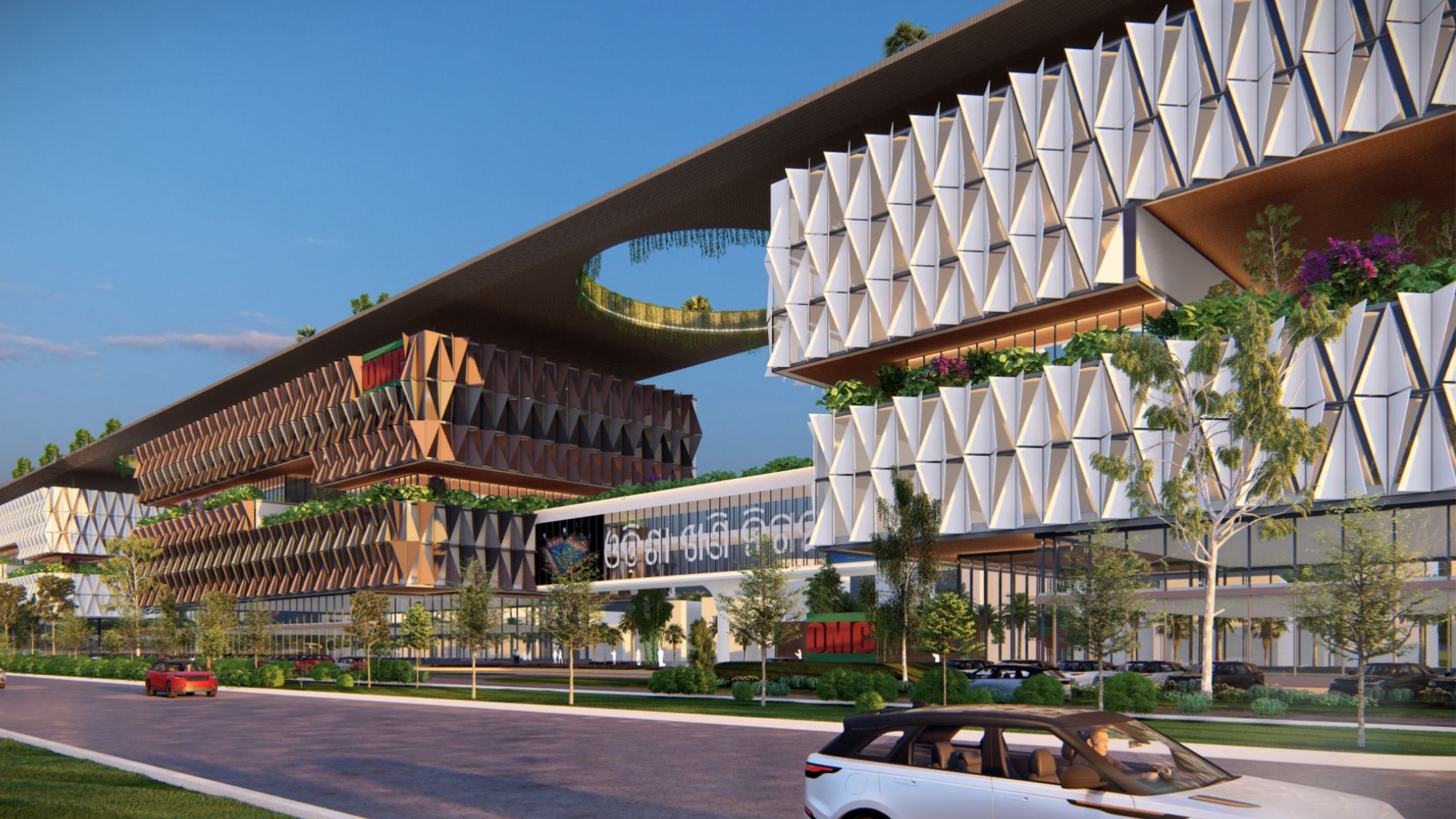
The Odisha Mining Corporation (OMC) headquarters, designed by Design Forum International, showcases the potential of responsive architecture and institutional architecture in practice. The southwestern façade features perforated aluminium fins integrated with motion sensors, programmed to respond to the sun’s trajectory. As sunlight changes, the fins open or close, modulating daylight glare while creating a dynamic visual rhythm. The kinetic skin, paired with AI-controlled projections on overhead canopies, transforms the building into an evolving architectural canvas.
OMC, Odisha, demonstrates how sustainable architecture firms in India are redefining commercial architecture and institutional architecture by creating buildings that are comfortable, environmentally responsible, and visually captivating.
The Future of Adaptive Architecture
While energy efficiency and climate responsiveness are key, the promise of kinetic façades lies in enhancing human experience. By translating environmental data into movement, these systems invite occupants and visitors to engage with architecture as a living entity. Terraces, bridges, and communal spaces become areas of interaction and engagement. Kinetic façades represent a shift toward intelligent structures that can sense, learn, and respond to human needs. As materials, sensors, and AI algorithms evolve, Indian architects have unprecedented opportunities to design façades that are contextually aware, sustainable, and interactive. The challenge remains to ensure that these innovations enhance user experience while maintaining a people-first design approach.
The OMC project is a glimpse of what’s possible when architecture embraces movement, perception, and adaptability. Across India and globally, similar explorations are redefining skylines and workplaces. Kinetic façades are not just technological advancements, they mark a philosophical shift, a reminder that architecture, at its best, evolves with the environment and the people it serves.
The Future of Adaptive Architecture
While energy efficiency and climate responsiveness are key, the promise of kinetic façades lies in enhancing human experience. By translating environmental data into movement, these systems invite occupants and visitors to engage with architecture as a living entity. Terraces, bridges, and communal spaces become areas of interaction and engagement. Kinetic façades represent a shift toward intelligent structures that can sense, learn, and respond to human needs. As materials, sensors, and AI algorithms evolve, Indian architects have unprecedented opportunities to design façades that are contextually aware, sustainable, and interactive. The challenge remains to ensure that these innovations enhance user experience while maintaining a people-first design approach.
The OMC project is a glimpse of what’s possible when architecture embraces movement, perception, and adaptability. Across India and globally, similar explorations are redefining skylines and workplaces. Kinetic façades are not just technological advancements, they mark a philosophical shift, a reminder that architecture, at its best, evolves with the environment and the people it serves.
As architectural boundaries continue to be pushed, luxury housing in India will undoubtedly remain at the forefront of architectural innovation, offering residents a life of unmatched luxe and style while enabling community living.