Great architecture does not shout. It gently invites the user into itself with the help of its experiential qualities, right from its approach to its exit. The spaces designed as intermediary interventions bring out a unique experience with their unpredictability. Such liminal experiences, if allowed to dictate the layout, help retain the sense of newness of the space. This newness is particularly important when it involves planning high-footfall spaces, such as an office, occupied daily. An ideal office space must walk in tandem with the changing culture of its users. The pre-pandemic work environment vastly differs from the new and accepted hybrid form of working.
Spatial planning must, therefore, work to counter the monotony that often-frequented spaces begin to exude. For example, an open floor plan might allow the flexibility of a custom internal layout. However, if a similar approach is executed for the overall campus planning, the absence of any visual hierarchy would soon become monotonous. The liminal spaces could instead bring in visual points of interest.
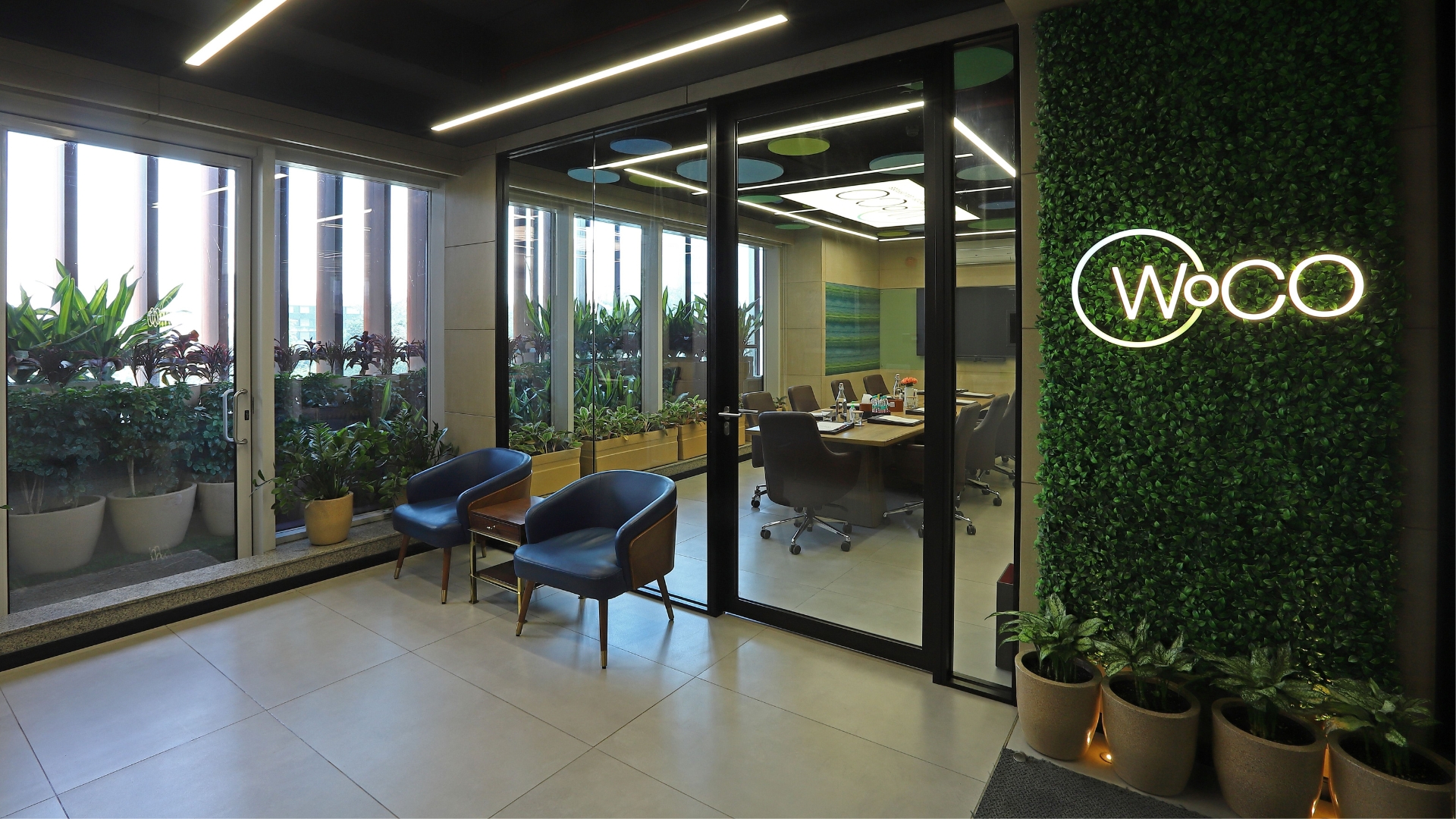
WoCO One, designed by DFI and located in the dense commercial neighbourhood of Gurugram, is designed to rethink how work environments primarily operate. By weaving intangible properties like spatial hierarchy or interesting volumetric combinations, the WoCO tower explores how intermediary spaces can create a new response to the worn-down templates of office design.
The programmatic segregation of functions should be uncomplicated, but their experience need not be. The differences between floor clusters 5-7 and 1-4 in the tower are a testament to that. While both clusters operate as open-plan workspaces with balconies spilling over from some of their floor plates, their volumes offer individualistic experiences. This is required to craft spaces that could keep a refreshed perspective, even with frequent usage.
For the new workforce, the boundaries of what constitutes a workplace are blurring. The relevance of an office environment then rests on its ability to provide the required flexibility. The future of workplace planning is in this adaptability and user-centric configurability. Only through auxiliary elements of spatial planning—such as the interstitial buffers of regularised informal spaces—can the shift in the nature of workspace design be refreshed.
As architectural boundaries continue to be pushed, luxury housing in India will undoubtedly remain at the forefront of architectural innovation, offering residents a life of unmatched luxe and style while enabling community living.