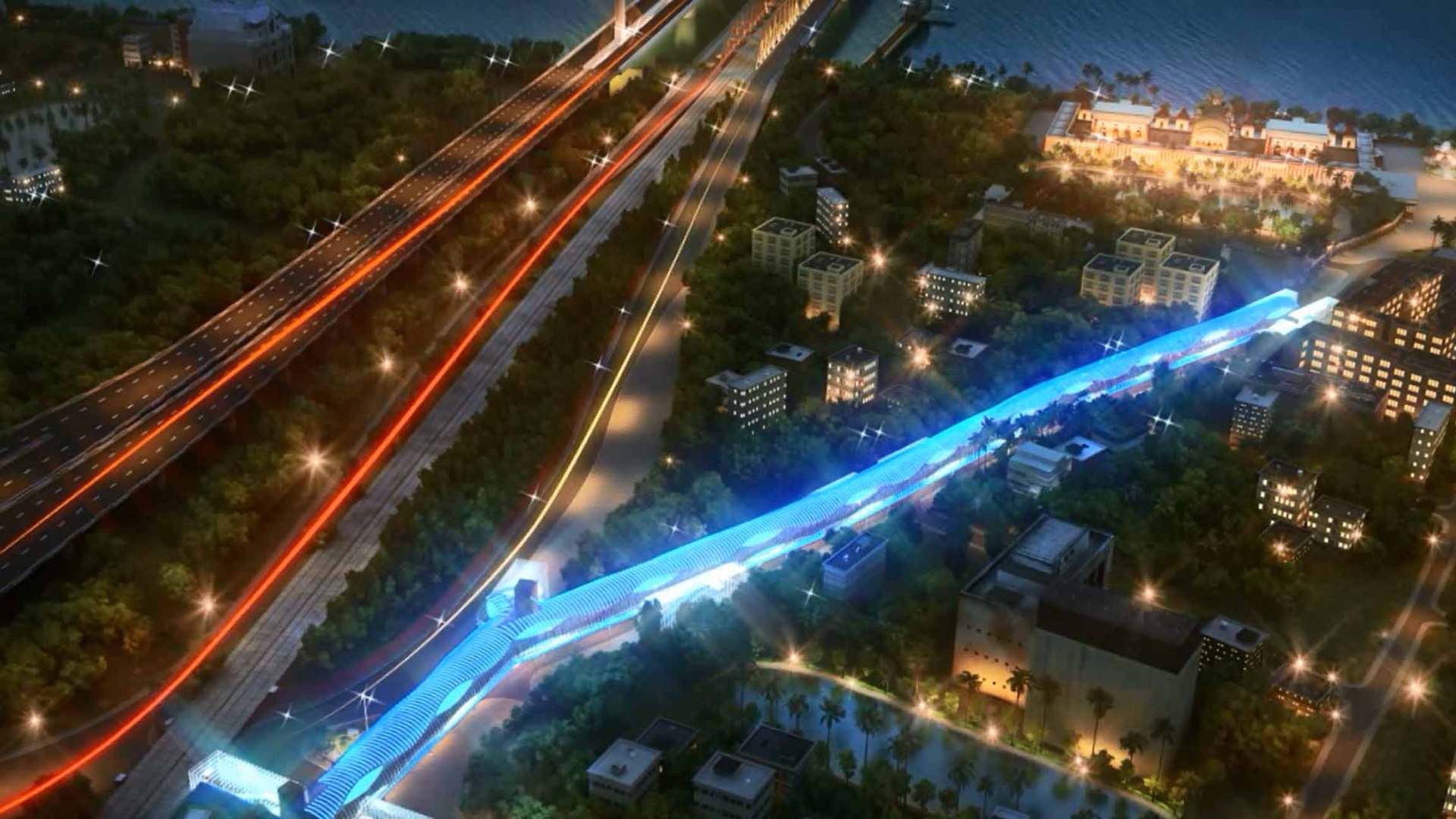
For decades, rapid urbanisation across India has inadvertently reduced our metropolises to transactional economic hubs, trading long-term habitat quality for short-term spatial efficiency. The current implementation of Transit-Oriented Development (TOD) focuses almost exclusively on transportation infrastructure—pumping billions into metro lines, rapid rail, and expressways to increase population density.
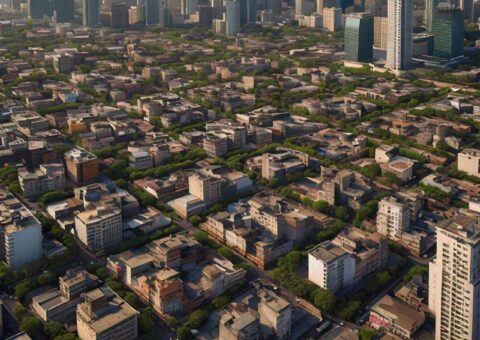
However, as the population increases onto isolated concrete grids without ecological support systems, it transforms high-density corridors into literal urban heat islands and dust fields. Mobility alone cannot make an expanding city livable. True urban success must be measured by human well-being, clean air, and functional natural resources, which demands that architecture shift from imposing generic infrastructure to respecting local ecological limits.
The Three Foundations of Urban Healing
At Design Forum International (DFI), we believe architecture must act as an active problem-solving mechanism that synthesises environment, engineering, and human behaviour. Every high-density development must be treated as a living system anchored by three primordial elements: air, water, and soil. Sealing the ground beneath continuous concrete plates destroys natural water absorption and strips the soil of crucial microbial life.
To reverse this degradation, upcoming high-density projects must implement dedicated, deep-soil green envelopes along their perimeters to support massive canopy trees rather than cosmetic shrubs. These miniature urban forests act as living infrastructure—sequestering carbon, generating oxygen, being porous enough to capture monsoon run-off, and actively mitigating microclimatic heat islands.
Regenerative Frameworks in Action
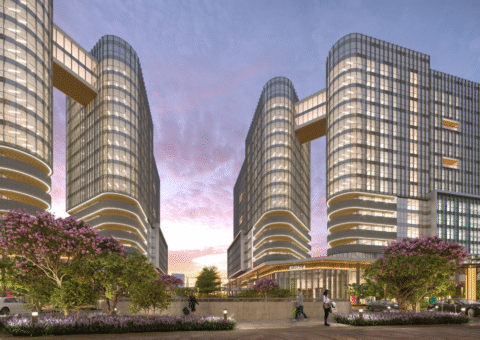
Transitioning to an ecologically sound TOD corridor requires reimagining high-density building typologies as active environmental assets. The design of Kaushal Bhawan in New Delhi sets a benchmark for high-density civic nodes along urban arteries, mapping office zones around retained, mature tree islands to preserve site ecology and foster natural ventilation. By balancing density with extensive ground-level greens, the master plan maximises passive micro-climate regulation and restores the localised air-water-soil balance necessary for TOD corridors to breathe.
A New Paradigm for TOD
Mobility alone cannot compensate for lost environmental systems. To build cities that endure for the next half-century, high-density development must evolve into a cohesive framework in which built density and natural ecosystems coexist in equal measure. When we align infrastructure with the living cycles of air, water, and soil, transit corridors cease to be transactional transit spaces—they become the ecological lungs that allow our cities to breathe.