From Product Display to Narrative Building
In the premium residential sector, a home is no longer just a configuration of square footage; it is an expression of identity and aspiration. Consequently, experience centres have shifted from showcasing products to building narratives.
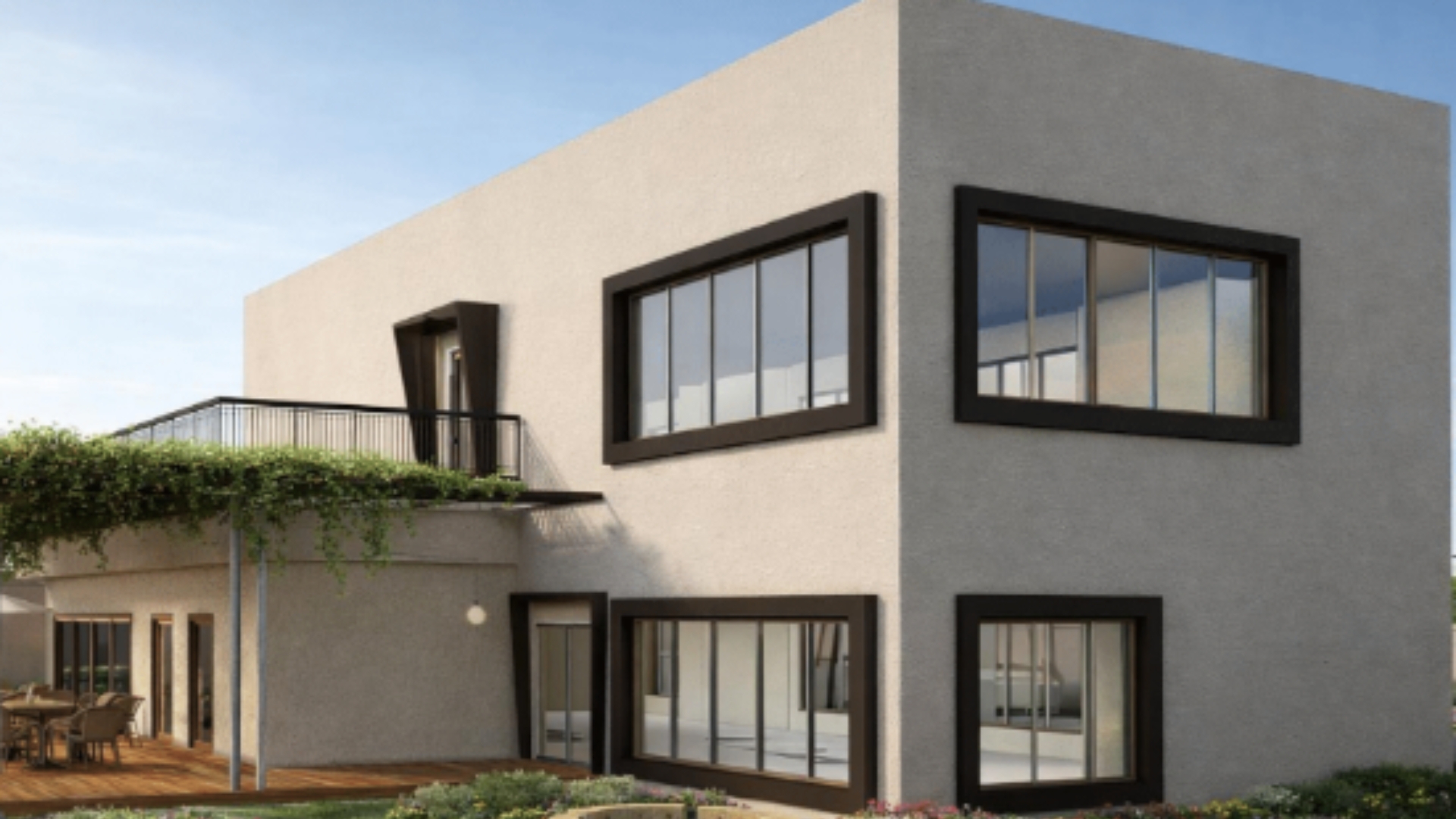
The design intent here is to communicate the project’s positioning. Whether it is the resort-like stillness of One by MSN in Hyderabad or the high-street vibrancy of a mixed-use hub, the experience centre must act as a spatial trailer. It reflects the lifestyle the project enables, focusing on how the community will interact, how the light will move through the corridors, and how the development anchors itself within the city’s fabric.
Designing the Journey: A Glimpse into the Eventual Environment
For a large-scale development, the experience centre functions as a laboratory for the project’s larger intent, utilising spatial sequencing to guide the visitor through a curated journey that mirrors the eventual resident experience. This immersion begins with landscape cues, where integrated greenery and water features echo the passive sustainability of the main site, creating an immediate environmental connection. This is further reinforced through material palettes that employ a consistent tactile language, whether it is the monumental stone of a civic landmark or the warm, breathable textures of a wellness retreat, to establish sensory familiarity.
By recreating these nuances at a smaller scale, an experience centre provides a tangible, lived-in preview of the project the homebuyer will eventually inhabit.
The Role of Technology: Scaling the Vision
While physical materiality builds trust, technology provides scale. Tools like Augmented Reality (AR) and Virtual Reality (VR) allow users to step out of the microcosm and engage with the project at its full urban scale.
However, the DFI approach to technology is one of restraint. The challenge lies in integrating digital tools so they enhance spatial understanding without overwhelming the senses. A VR walkthrough is most effective when it complements the physical touch of a stone finish or the actual view from a balcony, bridging the gap between what is currently a construction site and what will soon be a future ready home.
A Representation of Intent
Ultimately, an experience centre is a manifesto of intent. It is a bridge between an architectural vision and a resident’s reality. While it is not the final product, its role in building trust is unparalleled. It offers clarity in an often-opaque process, allowing buyers to evaluate not just what they are getting, but what the development represents in terms of long-term value
As we move toward more immersive urban storytelling, the experience centre remains the most critical tool for communicating the larger vision of a development, one that is rooted in purpose, built with precision, and designed for life.