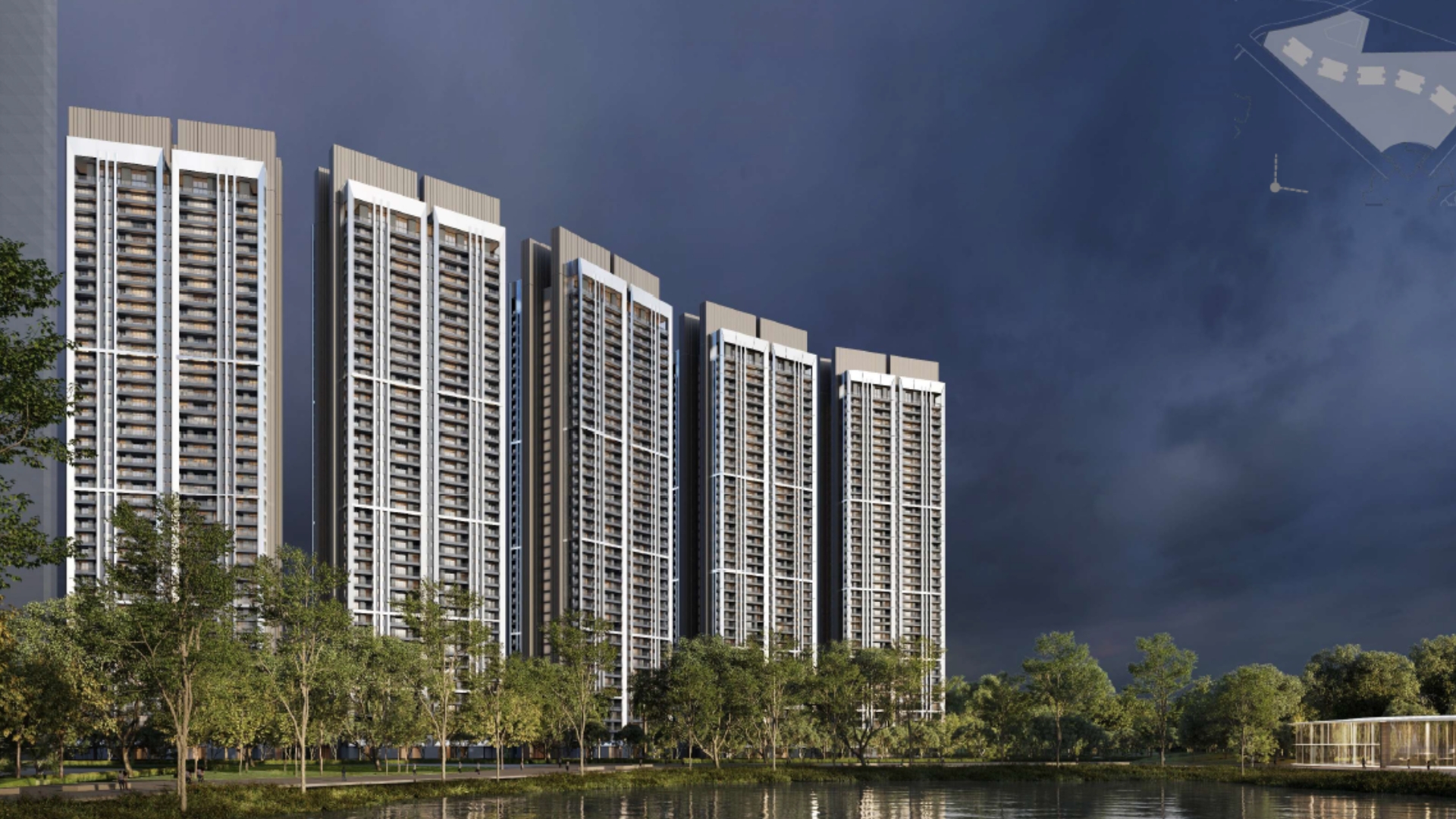
Across many Indian cities, growth has produced fragmented conditions. Gated enclaves and single-use districts function in isolation, limiting continuity across the urban fabric. What emerges is a city that operates in parts rather than as a cohesive whole. The idea of the new urban neighbourhood begins with restoring this sense of connection.
Designing for Everyday Life in Urban Neighbourhoods
A neighbourhood is treated as the primary unit of urban design. It is not an afterthought to planning, but a framework that shapes how people live and interact over time. Design begins with observing everyday behaviour. A short walk to a local store, children finding their way to school, moments of pause along shaded edges; these are not incidental. They define how a place is understood and used.
When urban neighbourhood design responds to these patterns with clarity, movement becomes intuitive. Spaces become easier to navigate and more comfortable to occupy. A neighbourhood begins to feel legible, allowing people across age groups to engage with it without effort
Walkability plays a central role in this experience. When essential functions are placed within walking distance, daily life becomes more manageable. The need for constant travel decreases, along with the associated stress. This shift supports environmental performance while improving the overall rhythm of life in Indian cities.
Structuring Connected and Mixed-Use Neighbourhoods
The public realm is equally important in shaping successful neighbourhoods. Spaces between buildings influence collective experience far more than individual plots. Streets, courtyards, and open areas are approached as connected systems within the public realm. Their design considers scale, comfort, and continuity to support everyday use. When these spaces are resolved with care, people remain within them longer, allowing interaction to take place over time.
Mixed-use development strengthens this condition. When living, working, and recreation exist in proximity, the neighbourhood maintains activity through the day. This continuity supports safety and contributes to a more stable local economy. It also allows the built environment to adapt more easily to changing needs.
Connectivity extends this framework outward. A neighbourhood must link clearly to the larger city through accessible movement networks. Walking routes, cycling paths, and public transport systems need to align so transitions feel direct and coherent. This allows residents to stay connected to the city while experiencing ease in their immediate surroundings.
A city holds together through the strength of its everyday life. That life is built at the scale of the neighbourhood.